
In the relationship between the firm (or any other kind of organization) and the consumer we can distinguish three alterations of trust: calculus, institutional, and personal trust. This post will explain these three alterations.
Calculus trust. Calculus trust considers the information passed; the source are social experience and past own experience with the specific firm. Information for this trust can also be based on tests of quality, guarantees, and findings. Calculation is one of the main elements of consumer trust; retail banks employ certain concepts to support this confidence building.
Institutional trust. Institutional trust plays a crucial role in the banking business in general and in retail banking in particular. This trust modification is based on activities of customer organizations and existing legal regulations. According to BAUER et al (2007) institutional trust combines two aspects, one aspect concentrates on persons and another aspect focuses on their position within the society. Trust in bank employees is simultaneously trust in financial institutions when, for example customers assume that the bank employee in the local branch or in the call centre will render them the services which they can expect in legal terms (based on their contracts). This assumption is not based on results of interpersonal experiences – though it can be affected by those – but on induction from other experiences. Hence trusting in specific types of organizations, i.e. banks, in terms of an institution in everyday life means to bind a specific situation to a particular framework.
Continue reading ‘Alterations of trust’
Impressions from Islamic retail banking conference
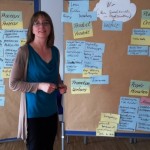
0 Comments Published by Oliver November 6th, 2011 in Banking Industry, This and that, TrustIn October this year I had the opportunity to speak at the 3rd annual world islamic retail banking conference in Dubai (U.A.E.). The topic of my presentation was “´Trust – the rediscovered condition in Western retail banking”. The three day conference (compare conference program) was held in the Shangri-La Hotel, Shaik-Zayed-Road.
Here are some impressions from the conference and from Dubai:
Continue reading ‘Impressions from Islamic retail banking conference’
Eurozone crisis explained
1 Comment Published by Oliver October 26th, 2011 in Interesting data, This and thatTaking into account the current situation regarding Eurozone’s problem, the BBC website offers an excellent website that explains the issues and challenges.
Impressions from Frankfurt Bookfair
0 Comments Published by Oliver October 16th, 2011 in UncategorizedIn the last couple of days Frankfurt was host of the “Frankfurt Bookfair”. Together with my colleagues from BAG we conducted a get together with our customers on Saturday. The major focus of the fair was the changing the landscape: digital content and the change of the value chain.
Some impressions from the fair ground:

Women’s quota for Management Boards
0 Comments Published by Dagmar October 12th, 2011 in Predictions, Strategic planningIn Germany there is a political discussion going on about women’s quota for positions in management boards and top management. This is a political discussion and mainly refers to large businesses, i.e. for DAX-companies, for the time being. Currently, political parties and even ministers have varying opinions about this topic. Ideas range from critical positions to voluntary commitments or legally enforced quotas. The result of this discussion is still completely open. However, some companies already prepare for this new requirement. For instance, Deutsche Telekom announced a 30 % women’s quota in March 2010.
Women’s quotas are mainly discussed in the context of necessary changes in the way business is done. Women are said to have a different management style and hence, a higher proportion of women in top management would change management culture. This idea became even higher priority with the current financial crisis, which is partly attributed to greedy (male) managers.
I will not discuss here my personal opinion about the chances for better management decisions due to a higher number of female managers. Neither will I elaborate about my opinion as a woman on the question if all these initiatives are what women need for their careers. Nevertheless, women’s quotas are related to questions of corporate government, regulation and sustainability and thus are part of some important megatrends. Hence, businesses are well advised to think about this seriously. Continue reading ‘Women’s quota for Management Boards’
Financial crisis 2.0
0 Comments Published by Oliver September 7th, 2011 in Banking Industry, PracticeThe financial turmoil 2007 – 2009 represented an excellent opportunity to review and to improve regulatory requirements because the industries’ readiness to adapt and change has increased during the crisis. The first crisis has put an emphasis regarding specific gaps in how banks identify, assess, control and report risks.
Today we have to answer the question whether (at all) and to what extent this opportunity has been exploited. VENKATRAMAN and MADASU (2009) argue that parts of the risks management systems and approaches in some banks were more on paper than in practice. The challenge in the next few years (still!) is to identify the right course for the long term in terms of greater transparency, effective regulation and appropriate tolerance for business growth. The general risk was that under the impression of the first turmoil, the primary focus is on trying to reduce the particular weaknesses only which caused the specific failures at hand. 3 years later we have to conclude that some major players in the market (i.e. SOG, UBS) did not make their homework. Even a triple A rating has a small default risk, but definitely not zero. Furthermore banks have to address the question whether they should rely their investment decisions on a rating only (compare S&P “Are Credit Ratings indicators of investment merit?“…..
In evaluating an investment, investors should consider, in addition to credit quality, the current make-up of their portfolios, their investment strategy and time horizon, their tolerance for risk, and an estimation of the security’s relative value in comparison to other securities they might choose.”)
Financial service organizations that focus on long term and sustainable success require an operating environment with regulatory conditions which support two objectives simultaneously: They offer a protection against turmoil and also support the efficiency of the sector by an appropriate combination of stability, a level playing field, and the possibility to perform. Furthermore it is essential that all regulatory bodies have the organizational resources to monitor a sound application of regulatory requirements and to identify malpractice of regulatory gaps. This in sum can be the best means of preventing crisis.
10 things to consider when integrating consumer electronics into corporate IT infrastructure
1 Comment Published by Guest August 7th, 2011 in Innovation, Practice, This and thatIn the fast-moving world of business, it’s vital for companies to keep up from a technology standpoint. This means that a certain amount of investment must be channeled into the IT department. This of course means that IT staff need to be equipped with the fastest and best equipment available on budget. When so much focus is now put on computer technology, it seems unthinkable that any company would neglect investing in their IT department. We’re not talking about decking their office out with a full complement of Coaster
furniture (although we’re sure they’d enjoy that), rather that they have the best technology available to them. This may, of course, mean that some consumer electronics find their way into the IT infrastructure of the corporation. Whether that means iPods, tablet PCs, smartphones, or any other tech, sometimes consumer electronics can make a huge positive difference to IT operations. Below you’ll find 10 things you should consider before deciding on bringing consumer tech into your IT department…
10. Time-wasting
Giving your IT team the latest smartphones to communicate better is a great idea, but you need to be careful about monitoring their usage. Yes, you want this tech to help them do their jobs better, but you don’t want them to be playing Angry Birds all day. Before you start handing out iPhones or HTC Desires, be sure you can keep a lid on any time-wasting that may occur as a result.
9. Theft from the workplace
When a company starts investing in the latest ‘must-have’ consumer gadgets, they can unfortunately make themselves the target of thieves. Where there are expensive items, there are eager eyes. You can avoid theft from the workplace in a number of ways, so be sure you’re covered before you deploy the latest consumer tech.
The impact of creativity and imagination on strategy formation
0 Comments Published by Oliver June 13th, 2011 in More theory, Strategic planningAs discussed in the previous posts strategic discourses support organizations in ambiguous situations. Creativity and imagination might have an impact on strategy formation as well. HURST, RUSH and WHITE (1989) criticize the emphasis of analytical thinking, rationality and objectivity and present a contrast model with the four attributes intuition, emotion, thinking and feeling. STRONG (2005) confirms this, since he highlights specific attributes of strategic planning. According to him “Strategic” implies process, creative thinking, teamwork and flexibility.
MINTZBERG (2000) criticizes the assumed equation between strategic planning and strategic thinking and describes different fallacies in terms of predetermination, detachment and formalization. He argues that the development of strategies “…requires insight, creativity, and synthesis, the very things that the formalization of planning discourages”.
HAMEL and PRAHALAD (1995) establish a border between an analytical, reproductive understanding of strategy formation; instead they employ the terms “imagination” and “foresight” and recommend focusing on the creation of new business segments and new value creation systems. LINDA, ROSS and VICTOR (2001) argue that “imagination is the capacity to form mental presentations, motivated by our emotional responses to the word surrounding us…”. ROSS and BART (1998) see three meanings for the term imagination. A representational imagination seeks, identifies and defines frames and regularities; hence it manages and reduces environmental complexity. A productive imagination develops new and original opportunities through a combination, recombination or transformation of things or concepts. Existing ideas and concept represent the raw material in order to develop new ideas. In this perspective productive imagination is creative imagination.
The parodic imagination contains a deconstruction of what one perceives as the real world. It negates and reconstructs existing ideas and constructs by breaking rules and borderlines, it defames, contradicts, and destroys the clarity generated by representation. This type of imagination is closely related, but not equal to creativity. It is distinct from fantasy, too. LECHNER and MÜLLER-STEWENS (1999) argue that the parodic imagination has the largest potential to form a new strategy.
The impact of language on strategy formation
0 Comments Published by Oliver May 15th, 2011 in More theory, Strategic planningStrategy formation can be understood as a communicative process or at least as a process that is attended by communication. In particular in ambiguous situations with justification of decisions and demands for legitimacy, communication can play a major role. Various sources in the academic literature have the assumption in common that human reality is a linguistic designed phenomenon which is radically different from an objective environment presentation. MINTZBERG (2000) confirms this in terms of strategy, since he argues “They are abstract concepts, in the mind of people”.
WESTLEY (1990) focuses on the linguistic contact between different management groupings. He introduces the term strategic conversation and defines it as “verbal interactions within superior-subordinate dyads focusing on strategic generalities”. A distinction is made between three dimensions: Firstly the dynamic to involve or to exclude subordinates in conversations with strategic content, secondly the dynamics of dominance and submission and thirdly the relationships between strategic conversations and the role of contextual factors, i.e. coalitions, predominant corporate doctrine. KNIGHTS and MORGAN (1991) highlights also the importance of language and recommend understanding strategies as “corporate strategy as a set of discourses and practices which transform managers and employees alike into subjects who secure their sense of purpose and reality by formulating, evaluating and conducting strategy”. Social practice and strategic relevant discourses create a process for social construction of reality, offering the chance to achieve a lock-in of participants. Due to this lock-in organizations are able to achieve the strengths to meet demands.
Continue reading ‘The impact of language on strategy formation’
The corporate sustainability strategy
1 Comment Published by Oliver January 23rd, 2011 in More theoryA couple of days ago I had an interesting conversation with colleagues in terms of sustainability. The issue was, whether organizations in Europe focus on true sustainability these days or just focus on a PR effect. I think the truth can be found in both sectors: There is a (also) an unpopular side of the interest in sustainability, an effect that can be described as “greenwashing”: when organizations focus more on communicating their green efforts than improving their measures and practices. Next to this PR aspect there are several approaches which put an emphasis on certain aspects only, i.e. economic goals or even environmental goals. But this is not sufficient enough. There is a large number of organizations which wants to be truly sustainable since they see many advantages arising from this concept.
Sustainability is basically not that new. In 1987 the word was presented in a UN report by the former Norwegian Prime Minister G.H. Brundtland. Brundtland presented a definition for sustainable development as “meeting the needs of the present without compromising the ability of future generations to meet their own needs”. Transferred to enterprises and organizations, a sound and holistic sustainability strategy has the following attributes. It drives several different strategies:
- A bottom line strategy to save costs, i.e. by reducing materials consumption.
- A top-line strategy to reach a new customer base.
- A talent strategy to win, hold and develop employees, customers and the surrounding community.
Hence a holistic sustainability addresses 4 coequal components:
- Economic (in the sense of operating profitability, this considers that organizations have economic needs),
- Social (in the sense that actions and conditions will affect members of the society),
- Cultural (in the sense of valuing and protecting cultural diversity) and last but not least
- Environmental (in the sense of protecting and retaining the ecosystem)
It has to be taken into account that environmental and social issues affecting an organization can be subdivided into 3 different categories:
- General social issues: These issues are important to the society. But the organization is not able to influence them.
- Value chain social issues: These issues are affected by the organizations’ measures and activities.
- Social dimensions of competitive issues: Issues and matters in the external environment which have an impact on the drivers of competitiveness where the organization runs its business.